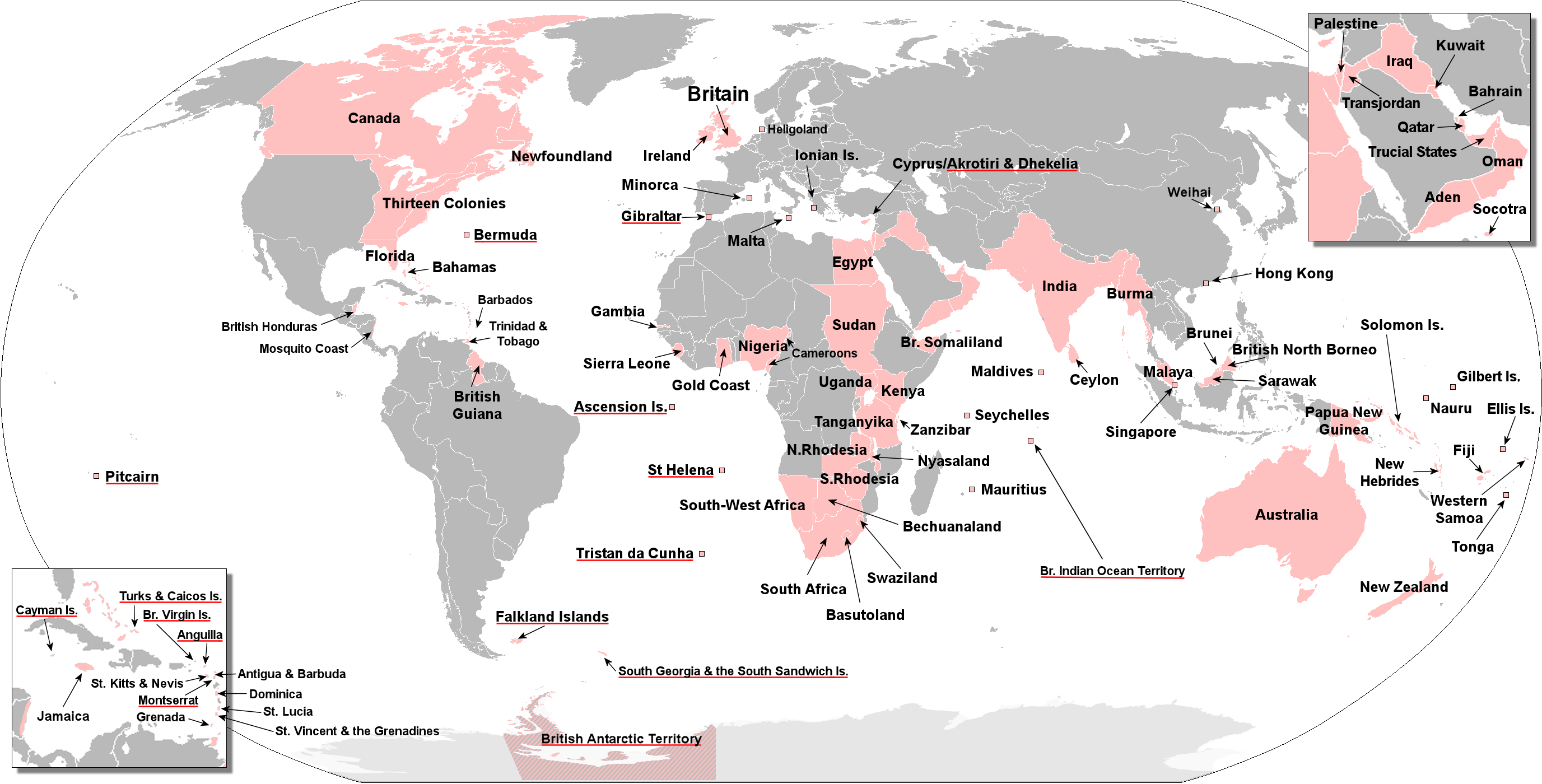
Today is Queen Victoria's birthday, a public holiday in Canada (observed on the preceding Monday) and the anchor point for the moving Empire Day holiday (which subsequently morphed into Commonwealth Day).
Debates about the British Empire - was it a monument of civilization or a system of global oppression? - have reminded me of debates about a more contemporary question: Brexit. Does Britain belong in Europe or not?
In a recent Financial Times article, Gideon Rachman examined the claims of two rival camps of historians as they argue about whether Britain has, historically, been part of Europe. Historians for Britain, the euro-skeptic party - led by David Abulafia, professor of Mediterranean history at Cambridge - contend that Britain has a long tradition of political continuity and moderate reform (unlike Europe, with its revolutions and reactions, not to mention Fascism, Nazism, and Communism), as well as physical separation from the European continent.
The pro-European party - which lacks a handy label, but did put out an article titled "Fog in Channel, Historians Isolated" - takes issue with these claims, noting that Britain has a long history of close interactions with the Continent. Not least among such linkages is Christianity, integral to Britain's identity, at least until quite recently, but also something to which Britain has no unique claim, but instead shares with the rest of Europe and regions beyond. Moreover, the critics note that Britain had a civil war, which, though several centuries ago, was no less nasty for its antiquity. So Britain is not immune to such upheavals. And then there's the Empire. "Expropriation, slavery, massacres, oppression, anyone?” asks Neil Gregor, professor of modern history at Southampton.
Rachman concludes that "I do not entirely agree (or disagree) with any of the historians I have met... [but] I agree with Abulafia and the Historians for Britain in one important respect: their argument that the UK has been unusually good at creating successful political institutions and that this is an inheritance worth cherishing and protecting." However, Rachman adds: "But I do not think that this adds up to an argument for Britain leaving the EU."
I would like to pull the lens even further back, so to speak. Ever since Leopold von Ranke (1795-1886), the father of the modern historical craft, we - I say this as a member of the historical guild - have focused on history wie es eigentlich gewesen (as it actually happened). This is a perfectly reasonable and laudable standard for historians to pursue. But as Friedrich Nietzsche (1844-1900) reminds us, history also has advantages and disadvantages for life. I would not go so far as to say, as Nietzsche might, that we should falsify the historical record for the sake of the impact it has on the present. But we would be fools to overlook the role that perceptions of the past have in shaping our imaginations, which in turn shape our actions.
In this context, I would argue that emphasizing Britain's long history of evolving, moderate, and generally freedom-loving political institutions is useful, even inspiring, for Britain's present, whether that be within or outside the EU. In a similar vein, I think a case can be made that emphasizing the British Empire as a global effort at fostering trade, harmonizing law, ensuring security, and spreading the Gospel is a worthy means of inspiring the men and women of today to deeds of virtue.
You might contend that these visions of Britain's past are as much romance as fact; I would suggest they are simply the product of particular emphasis. But what about all the failures that went along with these positive elements? Ah, you are putting on your critical history hat, as Nietzsche would say. As I pointed out five years ago, we can do that tomorrow. Today we celebrate the good.
Today's image comes from the Canadian War Museum.