At the end of his most recent post, Aaron dismisses the commentators on both sides of the party divide hyperventilating about this year's presidential election as an "extraordinary crisis." But, while Aaron certainly has a valid point about the ubiquitous hyperbole in our political discourse, I think he actually missed a good opportunity to examine why Donald Trump is such a polarizing figure and really may represent a turning point in our politics, especially for the relationship between conservative Christians and the Republican party.
Donald Trump, in his blunt, outspoken (not to mention "vulgar") way, has been able to expose the problem of political correctness in a way no other politician has done in the last 25 years. Before this year it was practically verboten to speak about certain topics, much less advocate for certain positions. The most obvious issues all have to do with Trump's "America First" platform: mass immigration, unfavorable trade agreements, and endless foreign wars. (Another key issue would be his opposition to the Black Lives Matter movement.)
On each of these issues Trump is smashing idols of both the left and the right, as we generally conceive them in America. This is the more substantive reason why--and not just because of his objectionable style--that the GOP establishment fought so fiercely and for so long to prevent his nomination. Trump chose for the ground to fight on issues where there was a broad consensus between the Republican and Democratic parties that was opposed by a large proportion of the country. For instance, on immigration, he has shown that much of the country is deeply dissatisfied with current immigration policy (which is basically just "let them all stay here if they manage to get in"). The Democratic Party favors changing the composition of the electorate in order to dilute the European Christian heritage of the United States; but the Chamber of Commerce wing of the Republican Party favors importing cheap labor for its constituency. This means that both parties are supporting a policy that artificially suppresses wages for workers born and raised in America. On the issue of foreign policy, Trump is the first and most prominent Republican (that I can think off of the top of my head, at any rate) to question all the wars we have been fighting since September 11, 2001; most mainstream Republicans were in thrall to the neoconservatives' push for regime change across the globe, just like the Democrats' presidential nominee is.
What confuses and frightens so many conservative Republicans about this election is that it took such a thoroughly disagreeable man as Donald Trump to attack the bipartisan consensus on so many important issues and actually restate positions that are more conservative than those of the GOP's establishment. He has discredited the party's current economic policy, which seems to be an unintelligent re-hashing of Manchester Liberalism's insistence on laissez faire, with a few concessions to special interests mixed in to spice things up. On foreign policy, Trump, though far from perfect himself, at least recognizes that most of what the U.S. has done in the past 20 years has been counterproductive and the result of a hubristic, Wilsonian desire to transform the Middle East one country at a time with an invasion and a few years of occupation, willfully blind to millennia of internecine slaughter there.
I could continue in this vein and analyze all the separate issues that have emerged in this election--and they are important. But here at the Guild Review we have another concern, which is just as, if not more, pressing than all those issues: What effect will this election have on the life of Christians (particularly conservative Christians) in the United States? Will he usher in a revival of Christian morality in our country, or will he at least stem the onslaught of the liberal, anti-Christian forces gaining strength in America?
Donald Trump, it must be said, has actually done conservative Christians a great service. He has exposed us as "losers," to use one of his favorite insults. We had no idea, but we really were losers!
In the last couple decades conservative Christians have pinned their hopes for at least a modest Christian renewal in this country on the Republican Party but have nothing to show for it except a few fruitless wars in the Middle East, more mass immigration from parts of the world that are culturally very different from the U.S., and more suffocating political correctness (especially on sexual issues). And now we are being asked to support for president a man who does not care at all about social conservatism! This is a man who has enjoyed flaunting in the New York tabloids his various girlfriends and wives (including his most recent wife who did nude lesbian shoots before she met The Donald). In the past few months he has had to work very hard just to pretend that he cares about abortion. And on the specific issue of Christianity, he admitted to the nation that he could not even fake being a Christian, and one of the most prominent speakers on the last night of the Convention, Peter Thiel, told the Party not to get "distracted" by culture wars.
The best we could hope for from Trump, then, is a general policy of laissez faire or maybe him throwing us a bone to keep us from whining too much. This means that the real challenge for conservative Christians from this point forward is twofold. First, we must admit that we supported many Republican positions that really may not have been that conservative or that Christian, and that Trump is right in some important ways. Second, we will have to find new way to fight for conservative Christian social issues now that it is clear that the Republicans are not really willing to make them a priority and that liberals appear to have gained the upper hand for the foreseeable time to come.
I wish I could offer a solution here, but these are all issues that I still need to ponder, and which don't have any simple solutions. Most importantly, though, these issues require us to honestly ask whether we have been duped, and what we plan to do about it.
Finally, as a bonus for readers who made it all the way to the end and who are wondering how I could think this way, I am providing two links to pieces by writers who have a generally similar outlook but can express some of these concerns better than I can: R.R. Reno's "Why I'm Anti-Anti-Trump" and Rod Dreher's "Trump & The God Vote."
Showing posts with label immigration. Show all posts
Showing posts with label immigration. Show all posts
Wednesday, August 10, 2016

Monday, February 20, 2012
How I'll Be Voting: The Rick Santorum Edition
 A couple weeks ago I wrote a post weighing three presidential candidates - Romney, Gingrich, and Obama - against a series of issues I laid out earlier. The short version of those ramblings was this: President Obama flubbed all of them. He supports same-sex marriages in all but name and is beholden to the National Education Association, one of the biggest obstacles to school reforms. He has shown no interest in overhauling the tax code or passing comprehensive immigration reform. With regard to the national debt, his latest proposal is to expand spending, but expand taxation more. That'll eventually get us there, but we need more.
Gingrich and Romney fared only somewhat better than the president. Both support school choice and Gingrich understands the three-fold requirement for immigration reform. But both are questionable on marriage - Gingrich' personal life leaves much to be desired in this regard, and Romney has a history of waffling on social issues - and although both gesture in the right direction with regard to the tax code and deficit, both seem more interested in slashing taxes than addressing the issues I am considering.
Meanwhile, events have overtaken my analysis. With wins in Colorado, Missouri, and Minnesota, Rick Santorum now appears to have edged Gingrich out and may even be passing Romney in polls. So how does he do?
Debt. Santorum favors a balanced budget amendment, and is willing to talk about Medicare and Social Security reform. Some of his particular proposals - such as halving the staff of USAID - I am less excited about, but there is a real commitment here to actually tackle the national debt crisis.
Tax Code. Santorum explicitly favors simplifying the tax code.
Immigration. Santorum favors reforming the immigration process, but only after securing the border first. He is opposed to amnesty for illegal immigrants. While I understand the opposition to amnesty, I don't see evidence here that he's considered the scale of the problem (10-12 million people) and the fact that some families are of divided nationality. Likewise, while I have no problem with securing the border first, per se, I worry that subsequent reform might never happen.
Education. Santorum favors pushing educational regulation toward the local level and increasing school choice.
Marriage. There is no question that Santorum is a solid supporter of a traditional definition of marriage.
I would be equivocating if I did not say that this is easily the best slate of positions on these issues of any candidate I have yet considered here. I will, however, make a few caveats. There are other issues - foreign policy, healthcare, etc. - that I have not considered. Likewise, there are other candidates I have not mentioned. And Santorum has other positions I did not weigh. (Perhaps typical of these is his first policy statement, against illegal pornography. I quite agree that pornography is a pestilence destroying the soul of our nation; I do wonder, however, if government is the best tool for attacking it, or if there are more pressing matters to which government alone can attend.) Moreover, a candidate with the right positions does not necessarily have a strong chance of winning a general election or passing his agenda if elected; prudence must dictate how far voters are able to compromise for political expediency before violating their consciences.
My colleague Stephen has made a compelling case that there is little a Catholic - or, indeed other persons of traditional faith - can do in the present political climate. He argues that we must conduct intellectual and cultural resistance, beginning in our own hearts; we must withdraw from the politics that have already exiled us, while still caring for the society around us. I find Stephen's comments quite persuasive, but I am certainly also intrigued by Santorum's recent success; does it represent a real breakthrough?
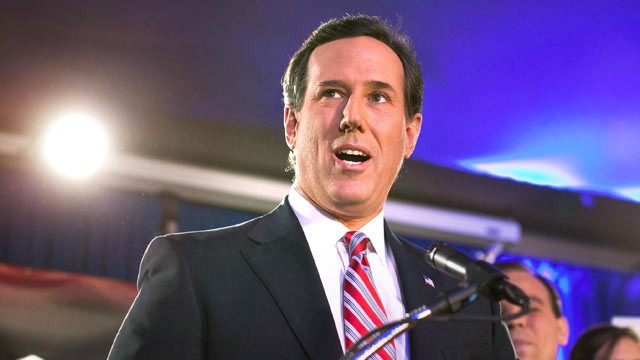
Image via ABC News.
Sunday, January 22, 2012
How I'll Be Voting - An Update

For the sake of discussion, I'll assume a three way race between President Obama, Mitt Romney and Newt Gingrich. This ignores the other Republican challengers and third party candidates. A third party vote can be a powerful message, and may even be necessary in the present climate, but we'll leave that topic for another day.
One more caveat: I've drawn heavily on candidate's own official policy statements. A fuller consideration would include their campaign statements, policy history, and analysts' predictions of future actions. One could write a dissertation on many of these questions. I mean only to start a discussion, not give the final word.
So how do the candidates stack up?
Debt. Will they balance the budget? That may require raising taxes, cutting spending, or both. That may mean reforming the procurement process or passing a balanced budget amendment. The specifics can vary, but we need to see a plan.
- Romney is calling for a program of "cut, cap, and balance." He wants to reduce spending, capping government expenditures at 20% of GDP, and then pass a balanced budget amendment. He acknowledges that entitlement reforms will have to be part of the picture. He argues that "we have a moral responsibility not to spend more than we take in." To do so is a cruel burden on our children and grandchildren. If one wants to be cautious, however, we might note that Romney has criticized the president's stimulus spending as adding to the debt, but - from what I can gather - Romney is more concerned about the spending part of that equation than the debt. His basic plan is to cut taxes to revitalize the economy, thereby raising revenue. The Laffer Curve sometimes looks like that, and it might work, but it might not. I worry that he may not be willing (1) to cut expenditures as deeply as he wants to cut taxes, and (2) to raise taxes to avoid Greek-style debt.
- Gingrich states that balancing the budget is one of his goals and has put forward a white paper on entitlement reform. The budget is, however, 7th of his 9 economic priorities. Moreover, he proposes to balance it by "growing the economy" (through tax cuts and deregulation) and "controlling spending". Newt's first economic priority is to "stop the 2013 tax increases." While I'm no fan of taxes, this maniacal emphasis on cutting them seems unlikely to lead to a balanced budget. Yes, economic growth is part of the long-term solution to the debt, and low taxes are part of that equation, but they are not the whole story. Nevertheless, Newt gets points for his real work during the 1990s to balance the federal budget. Past performance is no guarantee of the future - balancing the budget in the boom years of the '90s was certainly easier than in today's economic climate - but it counts for something.
- Obama's position page on the economy does not mention the national debt, our credit rating, or the problem of the deficit. Instead, he discusses jobs, the auto industry, Hispanic families and women. I don't mean to be cynical, but this is a naked appeal to some pretty specific interest groups, without consideration of the big picture. Given the way the national debt has ballooned under President Obama, he offers little on this issue. The one thing that can be said for the president is this: much of the debt that has accumulated during his years in office came from two wars he inherited, one of which he has ended, the other of which he is drawing to a close. This will lead to substantial savings, though it hardly amounts to a concerted deficit plan.
- Winner? I think Romney edges Gingrich out on this one, but all three candidates could focus more clearly on the debt.
- Romney advocates tinkering with the tax system, but hardly the overhaul it needs. This may be politic, but it's not leadership. His stated long-term goal is to "pursue a fairer, flatter, simpler tax structure," but his articulated policy details all pertain to modest tax cuts, not closing loopholes and shortening the tax code.
- Gingrich advocates an "optional flat tax of 15% that would allow Americans the freedom to choose to file their taxes on a postcard." This is good. The problem is that it's optional. Individuals and companies will still have an incentive to lobby for special exceptions.
- Obama only appears interested in closing loopholes if they're advantageous to Wall Street. His own campaign website promises special tax incentives for clean energy technologies and small businesses. I'm not opposed to either, but the president is doing nothing to fundamentally reform the tax code.
- Winner? A Romney-Gingrich tie. Both seem to have the right idea, but insufficient plans to execute at this time.
- Romney hardly has an immigration plan. He vows to "explore with Mexico, in his first 100 days, the need for enhanced military-to-military training cooperation and intelligence sharing to combat drug cartels and criminal gangs. Mitt Romney will complete a border fence protecting our southern frontier from infiltration by illegal immigrants, trans-national criminal networks, and terrorists." So he's serious about securing the border. But we need more. I see little interest in immigration reform, and on the touchy issue of the present illegal population, he has taken a hardline stance that either ignores the size of the problem or implies a police state.
- Gingrich hits the nail on the head, directly addressing the issue - unlike Romney's comments, buried in his foreign policy positions - and calling for all three elements of a solution. He might not get his way, or particular elements of his policies might not work, but this is the best I've seen of the mainstream candidates.
- Obama certainly styles himself a friend of the Hispanic community, but his website makes no mention of the immigration issue. That may be because he's set the record for deportations. This powerful stick has not been accompanied by the carrot of comprehensive immigration reform or a push therefore.
- Winner? Gingrich unambiguously comes out ahead.
- Romney is a firm supporter of school choice. Excellent.
- Gingrich also supports school choice (though a few details differ).
- Obama has made education a major element of his campaign. However, his education policy page primarily trumpets the spending of money. Considering the NEA's massive contributions to the Democratic Party, don't expect the president to rock the boat.
- Winner? Another Romney-Gingrich tie. The biggest unknown here is how far either one could get on actual reform before Washington chokes it off.
- Romney's tangled history of positions on abortion call into question his adherence to the moral positions of his Mormon faith. Nevertheless, the fact that he comes from a church famed for its strong families, and the fact the he remains married to his first wife, are good signs. However, Romney was once known as a supporter of same-sex marriage. He now opposes it, and explains that he was "firmly in support" of protecting gays, lesbians, bisexuals, and transgendered persons (GLBT) from discrimination, but he always opposed same-sex marriage. If that's an accurate representation of his views and policies over the years then I think he's right on target. But this may simply be waffling.
- Gingrich has a tumultuous personal history of failed marriages. That's troubling, though (1) I do believe in conversion and (2) nothing says a personally flawed leader cannot produce good policies for the nation, though I would be skeptical of such an outcome. Nevertheless, he has come out strongly against same-sex marriages. I do worry, however, that his position on this matter risks alienating moderate voters by sounding hateful; this is a difficult issue and any candidate should tread with care.
- Obama has positioned himself as a champion of the GLBT community. He has highlighted his opposition to the military's "Don't Ask, Don't Tell" policy, though this is one of the least controversial issues in the field of GLBT rights. The president has carefully avoided using the M word with regard to same-sex relationships, but he trumpets his support for "lesbian widow Edith Windsor in her suit
against DOMA [the Defense of Marriage Act]." - Winner? Gingrich, by a nose. His personal life notwithstanding, he's probably the most likely to sign pro-marriage legislation.
As I've argued before, the right to life - particularly the life of the unborn - is terribly important in a general sense, but is largely out of the hands of the president. The one exception is the appointment of Supreme Court justices. President Obama's appointments have been in favor of abortion; given Romney's checkered history of positions, I worry he might appoint the next David Souter. Gingrich is the only candidate of the three I feel confident would appoint an anti-abortion justice.
What do you think? Please, share your thoughts in the comment field!
Today's image of the 2008 Democratic National Convention comes via Reuters.
Monday, May 3, 2010
Further Comments on Immigration
 My newspaper, the Financial Times, has carried two interesting columns on immigration, a topic I addressed last week.
The first, from Christopher Caldwell, points out that
opponents of [Arizona's new] law promise to resist it through boycotts and court challenges. It may indeed be overturned. But such action is unlikely to be decisive. Challenges to its constitutionality focus only on a handful of policing elements that could easily be purged in replacement legislation. The bill is long, detailed, carefully crafted and extremely popular.
Caldwell is skeptical of the grounds on which a legal challenge might be fought:
The nub of the constitutional questions surrounding the bill is that the federal government, not the states, sets immigration policy. Does this bill usurp federal authority? At the most basic level it does not – it leaves to Washington the determination of who is and is not legally in the country.
He also points out the strange twists some protests have taken:
Democratic congressman Raúl Grijalva has backed an economic boycott of his own state. His district has a Hispanic majority. Only 34 per cent of his constituents are non-Hispanic whites. (Which makes it hard to see how singling out Hispanics for racial profiling would be possible even in theory.)
The second, by Clive Crook, notes that the Arizona law does not differ so widely from the federal statues it seeks to support:
Federal law already requires non-citizens to carry their documents at all times. It is an offence not to. The law’s arcane and sometimes surreal provisions impose many other demands, some more onerous than others. These rules are so weakly enforced that few legal immigrants are even aware of them.
His description of the current system is scathing - and accurate:
A moronic compromise has been struck, one that has achieved the worst of all worlds. To satisfy public opinion, the federal government promises to exert tight control of immigration – then fails to, because it is unwilling to enforce its own laws. And it is right not to enforce them. Apprehend and deport more than 10m illegal immigrants? That would require totalitarian powers and cripple the economy into the bargain. But voters then feel they have been lied to, which they have. Their distrust of Washington increases year by year, making an intelligent solution to the problem ever more difficult.
This pathological bargain has also skewed the pattern of immigration. Illegal unskilled immigrants pour in and fuel a grey, tax-evading, sub-minimum-wage economy. Immigrants with skills, willing to pay taxes but disinclined to evade the law and the border patrol, are shut out.
Ask any US high-technology company how this crimps its productivity – and forces it to send jobs abroad. (Let those workers pay taxes to other governments. It is not as though the US needs the money.) The shortage of highly trained people pushes up the US wage premium on skills, so economic inequality worsens as well. Yes, they thought of everything. I defy anyone to propose a regime more stupid than this.
Finally, he notes what elements are needed for a successful reform package:
The three essential components of the needed reform are easy to see. First, more effective enforcement at and especially inside the border, including credible policing of companies that hire illegal immigrants. Second, wider channels for legal immigration, including a guest worker programme that allows temporary migration sufficient to meet the country’s needs. Third, conditional amnesty for illegal immigrants already in the US.
Without laws that are enforceable and enforced, most voters will oppose amnesty, because they will suspect – and in this case it really will be a reasonable suspicion – that the next amnesty will not be the last.
It is a rare day that I can read not one but two pieces in the London-based FT about my home state. Let us hope that all this media attention and the growing debate will finally lead to some comprehensive, workable and just immigration reform.
Sunday, April 25, 2010
Thoughts from Afar
Arizona's new immigration legislation had drawn national and even international press. The bill has garnered widespread criticism, including from the Catholic bishops of Arizona. Though I no longer live there, my home state has a particular interest to me. And it seems to me that while the bill has a number problematic elements, some of which are talked about more than others, many of the criticisms which have been leveled do not hold water or are less important than is usually suggested.
Dubious Criticisms
First, let us consider the claim that the bill, which gives local law enforcement the power to stop suspected illegal immigrants and demand identification, will not be effective. Of all the charges against the bill, this seems least plausible. While some illegal immigrants will doubtless say, many will judge that the real possibility of fines or jail time is too much of a risk to bear. Reports are already circulating of such immigrants leaving for Mexico or other states.
Some have argued that the bill will open the door to rampant discrimination against the state's considerable Hispanic community, both legal and illegal. While this is quite possible, it strikes me as a bit of a red herring. I once heard a police officer explain that the average driver could be pulled over at any given time for three different violations. Racist law enforcement personnel already have opportunities to make life difficult for non-whites by hitting them with petty crimes and misdemeanors that usually go unenforced. But, by and large, such racist and unequal enforcement is not currently a problem: our law enforcement personnel are trained to high standards of professionalism, the courts are sensitive to charges of racism and the media quickly reports on such matters. Would the new law create new opportunities for racist misconduct? Yes. But we should not discount all the countervailing forces which currently exist and will continue to.
Another criticism raised is that the new law would take energy and resources away from law enforcement's more legitimate work elsewhere. There are two answers to this. First, the bill's supporters, including its sponsor, Russell Pearce, argue that the new law will actually free up law enforcement personnel by reducing illegal traffic at the border, leaving more officers free to operate elsewhere. Even if this does not pan out, I question the claim that this new law will draw law enforcement away from more serious crimes. Every police force has to prioritize its resources. Have you ever seen someone speeding in your neighborhood? Of course. Why? Because the police have decided that, given their limited budget, having an officer sit on your corner with a radar gun 24-7 is not the best use of their resources. There are other neighborhoods and more important crimes that occupy most of their attention. This law would add one more concern to law enforcement's list, but it would not have to be their top priority. Indeed, I doubt it would significantly alter the hierarchy of considerations.
Some people have argued that the bill will have a negative effect on Arizona's economy. This comes in two forms. First is the contention that illegal immigrants provide useful labor, stimulate the consumer economy and - even if they do not pay income tax - contribute to the tax base through sales taxes. There is some validity to these claims, but at stake here is a deeper question, namely, whether immigration limitations are beneficial or if we should simply have open borders. That is a very important question, but not the question on the table. With regard to the proposed bill, we are asking how current immigration laws should be enforced (particularly in the light of the federal government's limited success in doing so). Leaving aside the deeper question, there are some qualifying comments which can be made about this first economic argument. While illegal immigrants buy a variety of consumer products in the States, stimulating the local economy, they also send a considerable portion of their income back home. Thus, the stimulus value of one illegal immigrant is less than the corresponding value of a domestic worker who keeps the entirety of his income in the States. Moreover, while illegal immigrants do pay sales taxes, the kind of goods which they purchase - most notably food - have the lowest tax rates, so the addition to the tax base is somewhat reduced.
A second variation on the economic argument is that businesses will leave Arizona or will choose not to come in the first place. One perfectly valid reason is that they do not want their (completely legal) Hispanic employees being harassed by law enforcement. But I wonder if some companies are not also worried about the loss of cheap illegal labor. Even companies which do not employ such workers could feel the knock-on effects: Those involved in real estate may contract with construction companies which make use of illegal labor. Even high-tech companies make use of cleaning services which sometimes hire illegal immigrants. And even if a company is not contracting with someone who utilizes illegal labor, the very presence of illegals in the market increases the labor supply and depresses labor costs. Companies may be worried, and some for legitimate reasons, but I wonder if some are not also worried for selfish reasons.
Legitimate Concerns
One of the most troubling aspects of this bill is the requirement that people be able to produce identification at all times. This might seem like a minor item. Indeed, there was a time in my life when I thought it a perfectly reasonable policy. But I have since come to see that this is but one aspect of a troubling callousness toward our own liberties. In reading Brian Jenkins' The Fenian Problem: Insurgency and Terrorism in a Liberal State, 1858-1874, as I prepared to write a review (forthcoming in the Canadian Journal of History), I was struck by the keen sense of personal liberty present in the 19th century. Though battling terrorists, the British government could not countenance the notion of restricting gun ownership; this was, after all, a free country. The assumption was that individuals were free to live their lives as they pleased, and the state could only interfere in that for very compelling reasons. Today, even those who profess an attachment to liberty frequent assume the state will intervene in our everyday lives.
A few other aspects are worth consideration. One is the question of families: what if one parent is an illegal immigrant, the other a legal worker or citizen, and the children citizens? Should we imprison parents of young (and legal) children? Or does this cause undue harm? It seems to me that the simplest answer here would be to deport the offending parent, with the remaining parent and children having the option of staying in the States or also leaving. This is, admittedly, a difficult choice, but, I think, a fair one. The problem here is that states do not have the power to deport. So the new law would punish illegal immigrants with fines or jail time. This could pose a particular burden on children who are citizens but both of whose parents are illegal immigrants. A certain degree of leniency should be built into the law, giving judges leeway in determining sentences, and allowing them to take family circumstances into consideration. Still, the underlying problem is that the federal government, the one with the most relevant powers - those of deportation and of passing comprehensive immigration reform - has provided an inadequate response. Arizona can hardly be blamed for doing what it can.
One other concern raised has been that illegal immigrants may now increasingly become the victims of crimes because they are unwilling to call authorities for fear of being arrested themselves. This is a real problem. Faced with language barriers and short of money, illegal immigrants are already the victims of a considerable amount of crime, not least horrible abuse by "coyotes," guides who take them across the border, often forcing them to carry drugs as part of the deal. Being in the US illegally is a violation of the law and should be treated as such, but should be dealt with in a fair and legal manner; their illegal status should not make us wholly blind to the plight of illegal immigrants. That having been said, I wonder just how many fewer illegal immigrants would call authorities under then new law than currently do; many already fear law enforcement personnel. However, as with the issue of family, I would favor the inclusion of language in the new bill which might mitigate (or, at a judge's discretion, waive) punishment for illegal immigrants whose status was only discovered because they reported a crime. This is not an absurd notion, since the same concept can be found in so-called Good Samaritan laws.
The bishops complained that the bill is "mean-spirited," a charge I find particularly interesting. On the one hand, law enforcement is never going to be a very friendly or pleasant matter: it is, ultimately, the use of coercive force to uphold the law. On the other hand, I have been reading lately about Camp Hearne, in a work titled Lone Star Stalag. The camp held German POWs during World War II, and did so in a friendly and generous manner that is, frankly, shocking to the modern mindset. Reading about the humane and pleasant treatment of the prisoners, and their positive response to it, is truly uplifting. I cannot help but think that we are a lesser society for having lost that sense of generosity, even toward our enemies. But it strikes me that the present bill in question is more of a manifestation of society's mean-spiritedness, than it is a contributor to it. This spirit of vindictiveness is indeed worrisome, but we should focus on destroying it at its roots, not just its branches.
Let me be clear: I favor immigration reform. I think it should be easier, not harder, to legally come to this country, either as a permanent immigrant or as a temporary worker. What the present bill demonstrates is that the federal government has failed to provide such reform. We should not be surprised that a state like Arizona, with 460,000 illegal immigrants within its borders, would pass a bill like this. Indeed, similar measures in other states would not surprise me. Let us hope that all this furor has put a fire under Congress to take action.
H/T to my brother, Matt, with whom I disagree on some of these issues, but who keeps me informed and honest.
Saturday, November 22, 2008
Crafting New Positions for the GOP
Having mulled it over the last few days as I bike to and from school, I have decided that I quite agree with Lexington’s recent column in The Economist, “Ship of Fools” (13 November 2008): the future of the Republican Party and conservative politics cannot rest on ignorance and prejudice. If they are to have a future, it will be found in The Wall Street Journal and the Claremont Review of Books, not on Fox News. With the number of college graduates rising, the GOP cannot afford a declining percentage of this section of the electorate. Moreover, it is generally far easier to turn a complex policy position into a handy slogan, than to work the process the other way, teasing policy details out of mindless bumper sticker.
Some people, of course, might be happy to watch the Republican Party die. Let me suggest that a healthy two-party system is better for all Americans, on the left and on the right. The competition forces parties to make compelling arguments and win people over, rather than taking votes for granted.
So following Lexington’s lead, what kind of positions should the GOP begin articulating? Here are a few ideas:
On stem cell research: The Republican Party should fully support, and even happily fund, stem cell research. Just do it with adult stem cells; is that too much to ask?
On energy: The Republican Party should support diversification and fiscal environmentalism. Yes, we should drill in certain domestic locations. Yes, we should allow for the construction of new nuclear facilities (something that has been held up for decades for more political than regulatory reasons). And, yes, we should support low energy use and sustainability. Why? Because it is not only good for the environment, but it is also good business. Walmart is building some of the most energy efficient stores right now, for that very reason. Energy efficiency is not a bad thing.
On global warming: The Republican Party, following Bjørn Lomborg, should argue that trying to fix global warming is a sink hole for money; there are better ways to spend our funds. This does not mean global warming is - or is not - caused by human beings nor that it will – or will not – continue. The real question is what do we do with our scarce resources? Providing micronutrients to the Third World, liberalizing trade and fighting malaria are all likely to yield more gains than fighting global warming. If we undertake carbon emission reductions, it should be tied to business incentives, like the energy efficiency mentioned above.
On torture: The US should not torture. Period. It is contrary to human dignity and generally yields poor results anyway. Some will want to define what is, or is not, torture, and there is a real discussion to be had here. But the GOP should unmistakably underline that it opposes torture. There is nothing conservative about it. Dictatorship torture; the US does not.
On immigration: The multi-pronged approach that John McCain advocated – and then generally ignored or failed to articulate – is generally popular with the American people and is quite sensible. We need to be able to control our borders, know who comes and goes, and have some sort of minimum standards for people coming to work or study here (much less become citizens). But the process for coming here legally is a nightmare and surely needs to be reformed and speeded up. And we cannot kick out the 10 or 12 million illegal immigrants here, even if we wanted to; shy of having a police state, it is just not possible. Some sort of normalization process for them is in order.
On race: The Republican party opposed the Democrats on the question of slavery and fought a war to end it. There should be no room in the GOP for racial prejudice, explicit or implicit. Martin Luther King Jr. said that a man should be judged on the content of his character, not the color of his skin. On those ground, no form of racial discrimination, whatever its purpose, should be sanctioned by the government, including affirmative action.
On homosexuality: This is a tricky question for conservatives, and divides the movement’s libertarian wing from its traditionalist social conservative wing. Indeed, I sometimes find myself torn on what we ought to do politically with homosexuality. (The moral issues are fairly clear in my mind. Just pick up your copy of the Catechism of the Catholic Church.) Should gay marriage be legal? It seems to me the word “marriage” itself is what traditionalists are most eager to defend, that is, some notion of the sacrament in question. While there are gay activists on the far left who will not rest until they too can be legally married, it is my impression that most gay couples are more interested in matters of benefits, visitation rights and other legal issues. If they want the imprimatur of some person in authority administering vows, let them find a minister of their liking who will do the deed. But if the state is delivering equal legal benefits, I see no reason it has to recognize those vows. A tricky compromise, perhaps, but I have not yet seen a better suggestion.
With regards to the particular question of gay adoption, it seems to me that, so long as we allow single-parent adoption, adoption by gay couples must also logically follow. (What do they lack that a single parent has?) Thus, we should give priority to - if not outright require - adopting couples composed of both a man and a woman. From a legalistic perspective, this is not a matter of sexual orientation, per se; instead, it is an effort to secure the well-rounded development of children, who need both a father and a mother.
On evolution: Frankly, I have been disappointed by the discussion – or lack there of – on this point. There are generally two schools of thought: either Genesis is literal and, if it comes down to it, science be damned; or evolution occurred over billions of years and you can keep your Genesis account as a metaphor (which is a polite way of saying “irrelevancy”) but that is all. Some of this has to do with the breakdown of our ability to really think about myths and their meanings. I feel like there is a conversation that needs to happen here before we can have a sensible, conservative position we can pitch to the American people.
Coupled with a few cornerstones of contemporary conservative politics - low taxes, free trade, right to work (open shops), opposition to abortion, local control of education and strong national defense - I think the positions outlined above might not only be able to create an electoral majority, but might even produce some good policy.
Subscribe to:
Posts (Atom)